Gemstones — A Vast and Detailed Description
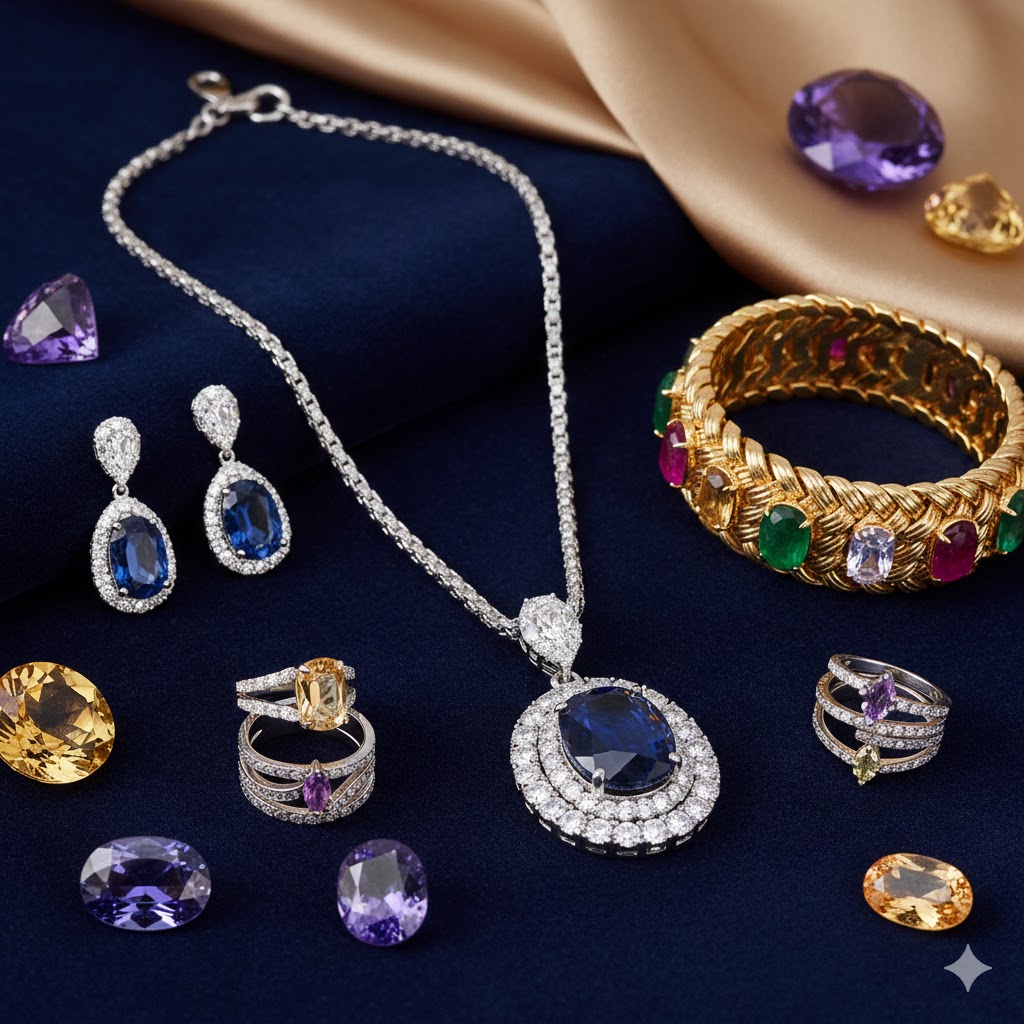
Gemstones are among the most mesmerizing creations of the earth—timeless treasures formed deep within the planet over millions, sometimes billions, of years. Each gemstone is a miracle of nature, shaped by immense heat, pressure, mineral composition, and geological transformations that turn ordinary elements into extraordinary crystals. From the shimmering brilliance of diamonds to the mystical depths of emeralds and the fiery glow of rubies, gemstones represent the perfect marriage of science, art, history, and spiritual symbolism.
Origins and Formation
Gemstones originate through several natural geological processes:
1. Igneous Formation
Deep within the Earth’s mantle, molten magma cools slowly, allowing crystals to grow. Diamonds, peridots, and certain types of garnets emerge from these volcanic chambers, brought to the surface by powerful eruptions. These gemstones often display remarkable clarity and hardness due to their high-pressure birth.
2. Metamorphic Transformation
Heat and pressure reshape existing rocks, transforming minerals into new crystalline forms. Sapphires, rubies, spinels, and jade are born through such metamorphic processes. These stones often reveal rich colors and intricate internal patterns formed by geological stress.
3. Sedimentary Deposition
Some gemstones form through layers of sediment, mineral-rich water, or organic materials. Opals, malachite, turquoise, and amber originate from gentle, water-based processes that create soft, porous, or layered structures with distinct patterns.
4. Hydrothermal Processes
Superheated water carrying dissolved minerals flows through cracks in rocks, leaving behind crystals like quartz, amethyst, and topaz when it cools. These stones often grow in beautiful clusters and geodes, forming breathtaking natural sculptures.
Beauty and Characteristics
Every gemstone is defined by the interplay of five core attributes:
1. Color
Color is the soul of a gemstone. It reflects the stone’s mineral composition and the trace elements within it:
- Ruby glows red because of chromium.
- Sapphire acquires blue hues from iron and titanium.
- Emerald radiates green from chromium and vanadium.
- Topaz shines in yellow due to iron impurities.
Gemstone colors vary from intense, saturated tones to soft, pastel shades. Some gems, like opal, do not have a single color—they display a kaleidoscope of shifting hues known as play-of-color.
2. Clarity
Clarity refers to the inclusions or natural marks within a gemstone. Inclusions can be microscopic crystals, fractures, or mineral traces. While flawless stones are rare and valuable, inclusions often tell the story of the gem’s formation. For example:
- Emeralds almost always have visible inclusions, called “jardin,” meaning garden.
- Rutile needles in quartz create beautiful patterns known as “rutilated quartz.”
3. Cut
A gemstone’s cut determines how light enters, reflects, and sparkles. Master cutters shape raw stones into faceted gems with precision angles, enhancing brilliance and fire. Cabochon cuts, with smooth rounded surfaces, highlight patterns like star effects (asterism) or cat’s-eye bands (chatoyancy).
4. Carat
Carat measures weight, not size. Larger stones are rarer and therefore more valuable. Some gems—like diamonds—are often valued per carat, while others, like opal or turquoise, are prized for beauty independent of weight.
5. Luster
Luster describes how a gemstone reflects light. Diamonds have an adamantine shine, pearls exhibit a soft nacreous glow, and jade displays a waxy surface.
Types and Varieties of Gemstones
Gemstones are broadly divided into three categories:
1. Precious Gemstones
These are the most valuable and historically significant gems:
- Diamond — the hardest natural substance, symbol of strength and purity.
- Ruby — the king of gemstones, representing passion and vitality.
- Sapphire — stone of wisdom and protection.
- Emerald — revered for its deep green color and association with love and rebirth.
2. Semi-Precious Gemstones
These include a vast range of colorful and unique stones:
- Amethyst, Citrine, Aquamarine, Garnet, Peridot, Opal, Topaz, Tourmaline, and more.
Each semi-precious stone carries its own distinct charm, energetic qualities, and cultural significance.
3. Organic Gemstones
Formed from living organisms:
- Pearl — created by mollusks, symbolizing purity.
- Coral — formed by marine organisms, valued for its vibrant red and pink.
- Amber — fossilized tree resin, glowing with ancient inclusions.
- Jet — petrified wood, used in spiritual jewelry.
Symbolism and Spiritual Significance
For thousands of years, gemstones have been believed to hold mystical powers:
Healing and Energy
- Amethyst calms the mind and promotes clarity.
- Rose Quartz invites love and emotional healing.
- Citrine attracts prosperity and confidence.
- Black Tourmaline offers protection and absorbs negativity.
Astrological Associations
In Vedic astrology, the Navaratna (Nine Gemstones) correspond to celestial planets:
- Ruby for the Sun
- Pearl for the Moon
- Coral for Mars
- Emerald for Mercury
- Yellow Sapphire for Jupiter
- Diamond for Venus
- Blue Sapphire for Saturn
- Hessonite for Rahu
- Cat’s Eye for Ketu
Each gemstone is believed to amplify the positive energies of its corresponding planet.
Cultural and Historical Influence
Throughout history:
- Egyptian pharaohs adorned themselves with turquoise and lapis lazuli.
- Indian royalty treasured emeralds and rubies in crowns and ceremonial jewelry.
- Ancient Greeks believed amethyst protected against intoxication.
- Chinese cultures revered jade as the “stone of heaven.”
Gemstones have influenced art, architecture, fashion, spirituality, and traditions across civilizations.
Modern Uses of Gemstones
Today, gemstones are valued for:
- Jewelry — rings, pendants, bracelets, crowns, earrings.
- Decor — carvings, sculptures, inlays, art pieces.
- Healing & Meditation — chakra balancing, affirmations, rituals.
- Investment — rare gemstones increase in value over time.
- Scientific Applications — diamonds in cutting tools, quartz in watches, rubies in lasers.
Synthetic vs. Natural Gemstones
With advancements in technology, labs can create gemstones identical in composition to natural stones. These lab-grown gems are:
- Eco-friendly
- More affordable
- Often flawless
However, natural gemstones retain a unique charm and value due to their rarity and connection to Earth’s ancient history.
Care and Maintenance
Gemstones require thoughtful care:
- Soft stones like opal and turquoise should be protected from heat and chemicals.
- Hard gems like diamonds can be cleaned with gentle soap and water.
- Porous gems should be stored separately to avoid scratches.
Proper care preserves their beauty and brilliance for generations.
