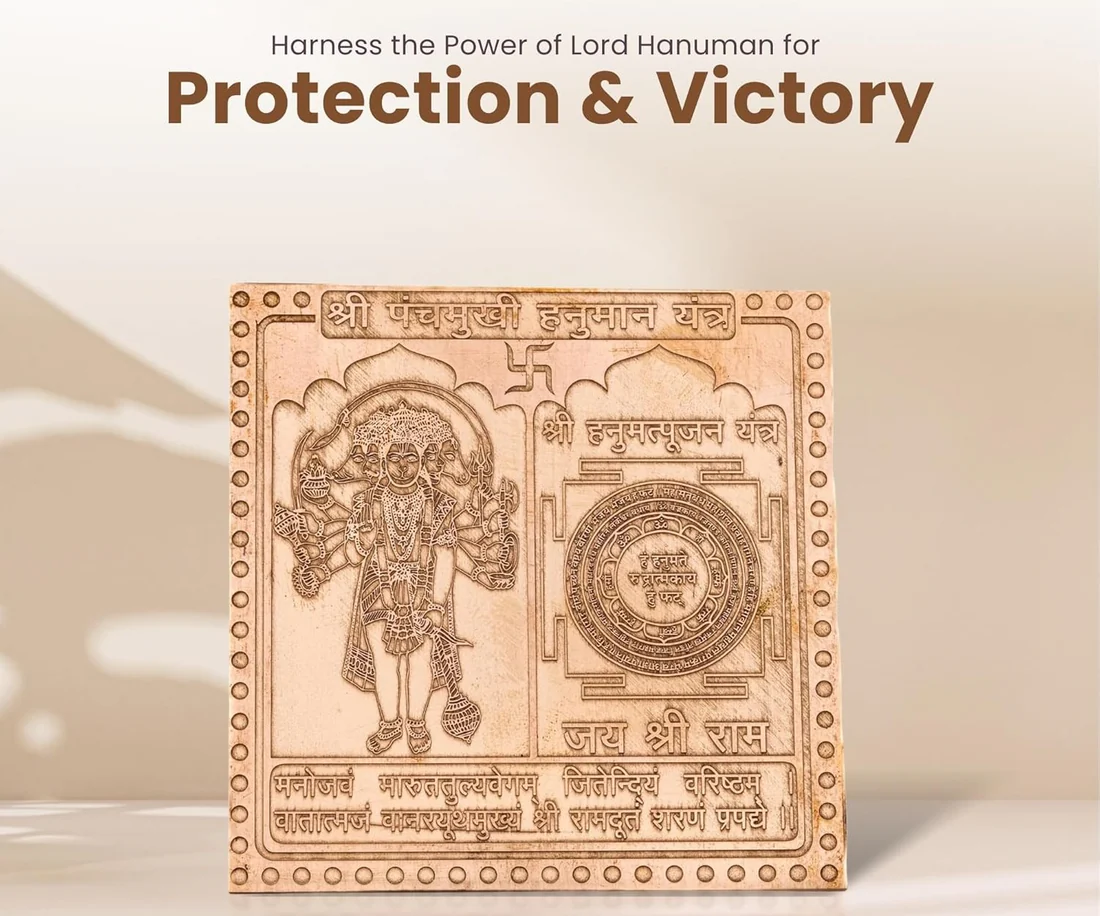
Panchmukhi Hanuman , also known as the Five-Faced Hanuman, is a powerful and revered form of Lord Hanuman in Hindu tradition. This divine form symbolizes protection, courage, knowledge, and the destruction of evil. The word “Panchmukhi” comes from Sanskrit, where panch means five and mukhi means faces. In this form, Hanuman manifests with five faces, each facing a different direction, representing different deities and divine energies.
Origin of Panchmukhi Hanuman
The most popular story about Panchmukhi Hanuman comes from the Ramayana and later Puranic legends. During the war between Lord Rama and Ravana, Ravana’s brother Ahiravana, the king of the netherworld (Patal Lok), kidnapped Lord Rama and Lakshmana.
Ahiravana had a magical boon that made him nearly impossible to defeat. The only way to kill him was to extinguish five lamps placed in five different directions at the same time. To accomplish this, Lord Hanuman assumed the Panchmukhi form, enabling him to face all directions simultaneously. With his five faces, he blew out all the lamps at once and defeated Ahiravana, rescuing Rama and Lakshmana.
The Five Faces and Their Symbolism
Each face of Panchmukhi Hanuman represents a different deity, direction, and divine quality.
1. Hanuman (East-facing)
- The central face is that of Lord Hanuman himself.
- Symbolizes strength, courage, devotion, and protection.
- Represents the rising sun and positive energy.
2. Narasimha (South-facing)
- The lion-faced avatar of Lord Vishnu.
- Symbolizes fearlessness, destruction of evil, and protection from negative forces.
- Associated with protection from enemies and black magic.
3. Garuda (West-facing)
- The eagle mount of Lord Vishnu.
- Symbolizes speed, strength, and protection from poison and serpents.
- Represents freedom from obstacles and harmful influences.
4. Varaha (North-facing)
- The boar avatar of Lord Vishnu.
- Symbolizes earthly stability, health, and prosperity.
- Associated with lifting devotees out of difficulties and ignorance.
5. Hayagriva (Upward-facing)
- The horse-headed incarnation of Lord Vishnu.
- Symbolizes knowledge, wisdom, and spiritual enlightenment.
- Associated with learning, memory, and divine intelligence.
Iconography and Appearance
Panchmukhi Hanuman is usually depicted as:
- A strong, muscular body with a radiant golden or reddish complexion.
- Five faces arranged in different directions.
- Ten arms (sometimes more), each holding a different weapon or symbol.
Common items held in his hands include:
- Sword
- Trident (Trishul)
- Mace (Gada)
- Discus (Chakra)
- Bow and arrow
- Lotus
- Shield
- Noose
- Bell
- Scripture or rosary
He is often shown:
- Standing in a powerful stance.
- Sometimes seated in a yogic posture.
- Surrounded by a divine aura or flames, symbolizing spiritual power.
Spiritual Significance
Devotees worship Panchmukhi Hanuman for:
- Protection from evil forces and negative energies.
- Removal of obstacles and fear.
- Success in difficult tasks.
- Spiritual growth and knowledge.
- Strength, courage, and determination.
Many believe that keeping a Panchmukhi Hanuman image or idol at home protects the household from harm.
Symbolic Meaning of the Five Faces
Together, the five faces represent:
- East (Hanuman): Purity and devotion.
- South (Narasimha): Fearlessness.
- West (Garuda): Protection from danger.
- North (Varaha): Prosperity and stability.
- Upward (Hayagriva): Wisdom and enlightenment.
This form symbolizes total protection in all directions—physical, mental, and spiritual.